
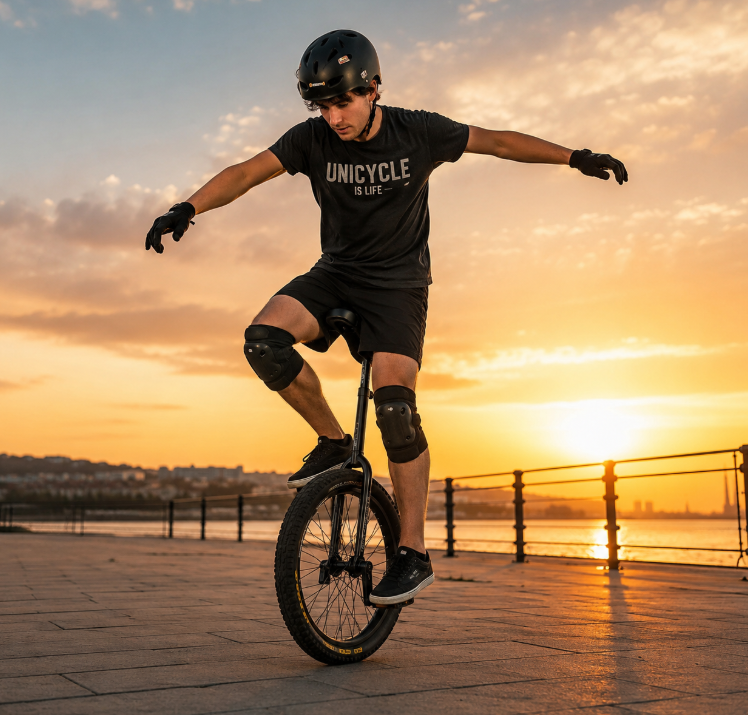
Unicycle stunts are where balance turns into performance and practice turns into style. Once https://www.tektekerbisiklet.com/ basic riding feels stable, riders naturally start exploring tricks that push control, timing, and creativity. These stunts are not just about looking impressive, they also sharpen coordination and confidence. Every new move adds another layer to riding ability, turning simple motion into expressive skill.
Basic One-Hand Riding Control
One of the first stunt steps is riding with one hand lifted. This forces the body to maintain balance without full upper-body support. Start by lifting one hand briefly, then switch sides for balance symmetry. Keep movements smooth and avoid sudden shifts. This stunt builds core stability and riding confidence. Seat-in-front riding is a classic unicycle stunt that improves control and posture awareness. The rider holds the seat in front of the body while maintaining forward motion. This position challenges balance and strengthens arm coordination. Start at slow speeds to maintain control. Over time, it becomes a strong foundation for advanced freestyle moves.
Small Hop Technique
Hopping allows riders to adjust position without dismounting. Begin by compressing slightly on the pedals and using controlled upward motion. Keep hops small and balanced rather than high and unstable. This technique is useful for navigating obstacles and improving reaction control. It also strengthens leg power and timing. Turning stunts improve spatial awareness and wheel control. A 180-degree turn involves rotating the body and unicycle smoothly in place or while moving slowly. Start with wide, controlled turns before tightening the motion. Focus on balance during rotation rather than speed. This trick enhances directional control and coordination.
One-Foot Pedaling Practice
Riding with one foot builds strength and precision. Lift one foot slightly while maintaining steady pedaling with the other. This requires strong balance and controlled rhythm. Start with short intervals to avoid instability. Over time, it improves pedal efficiency and control awareness. Arm movements add style and balance training at the same time. Riders can experiment with lifting, crossing, or extending arms while riding. These movements challenge stability and improve body coordination. Keep the core engaged to maintain control. Freestyle arm work enhances performance presence.
Slow Glide Control Stunt
The glide involves reducing pedal input and letting the wheel roll naturally for short distances. This stunt teaches riders how to maintain balance without constant pedaling. Start with one or two seconds of glide time. Gradually increase duration as control improves. It’s a key step toward advanced riding mastery. Weaving between objects like cones or markers improves precision and agility. Riders must adjust direction quickly while maintaining balance. Focus on smooth transitions rather than sharp corrections. This stunt develops reaction timing and spatial control. It also prepares riders for real urban environments.
Controlled Stop and Restart Trick
Stopping and starting smoothly is a simple but impressive skill when done well. Gradually reduce speed instead of stopping abruptly. Restart with steady pedal pressure and balanced posture. This stunt improves timing and rhythm control. It also builds confidence in handling motion changes. Unicycle stunts improve through repetition, patience, and gradual progression. Each trick builds a specific skill like balance, strength, or coordination. Combining multiple stunts creates smoother and more advanced riding style. Consistent practice transforms basic riders into confident performers. Skill growth comes from steady challenge, not sudden leaps.